
myMedicines: Care in Your Hands
Experience For Affordable & Accessible Healthcare
Bringing healthcare closer through intuitive mobile and web platforms that prioritize care, trust, and easy access to essential medicines.
Feb 2025 - Jul 2025
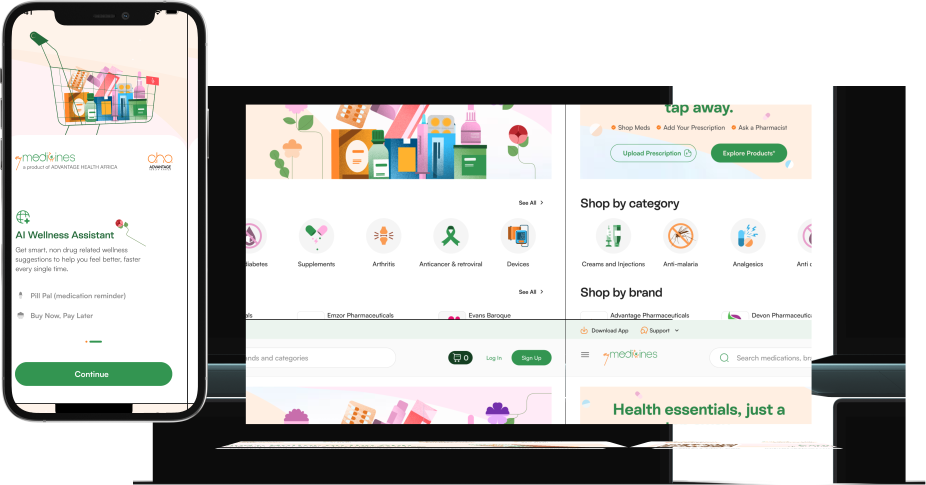
Project Highlights
Team
Aha! Lagos, Nigeria – B2C, Health
Served as the Design/Tech Lead on the myMedicines project.
My Contributions
- Design Facilitation & Collaboration
- Design Systems Development
- Collaborative Research Approach
- AI Experience Ideation & Design
Contributors
- 8 Engineers
- 2 UI/UX Designers
- Project Manager
- Cyber Security Analyst
Platform
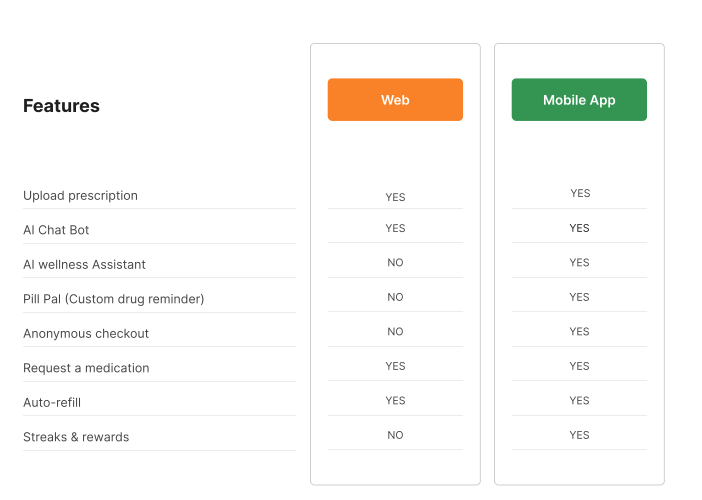
Mobile + Web
The Last Mile, First
myMedicines, founded on October 1, 2017, is an aggregated, award-winning platform owned by Advantage Health Africa. It was created to deliver quality and affordable medicines to the last-mile, bridging access gaps across Nigeria.
While the platform had gained traction through offline channels and early online adoption, we identified a strategic opportunity to scale customer acquisition and service delivery through dedicated web and mobile experiences. These channels were designed not just to expand reach, but to reinforce our core pillars of Trust, accessibility, and affordability — while aligning with aha's broader business goals.
As the Design Lead, my role was to facilitate collaboration across stakeholders, guide the research process, establish a design system, and translate insights into a cohesive user experience.
Design Strategy & Process

Discover
- • Initial meeting with product owners (Pharm. Wale & Sola)
- • Created & distributed questionnaires (aha! staff + past customers)
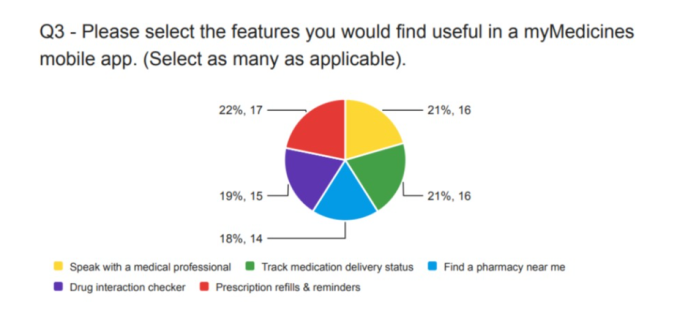
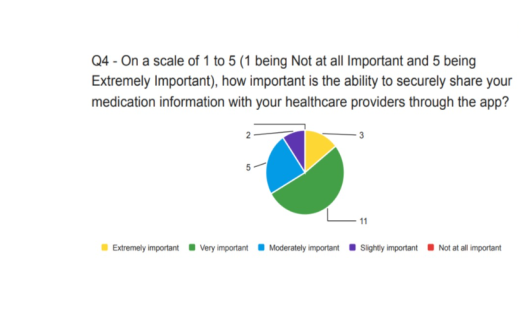
- • Collected insights on business goals & user pain points
Define
- • Reviewed survey results
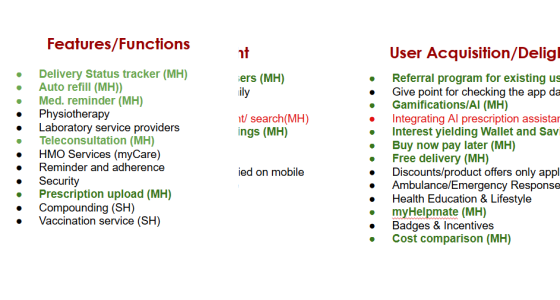
- • Stakeholder meetings to finalize features
- • Updated PRD with research-driven insights
Design
- • Mood boards & design direction
- • Created design system (typography, colors, UI components)
- • Design workshop with 2 other designers → mapped AI feature flows
Deliver(ongoing / build phase)
- • Translated research & system foundations into designs
- • Aligned outputs with business and user needs for future development
Lighting the Lantern
Where it begins with raw ideas, scattered insights, and the first flickers of possibility. This is the gathering ground before the sprint ignites.
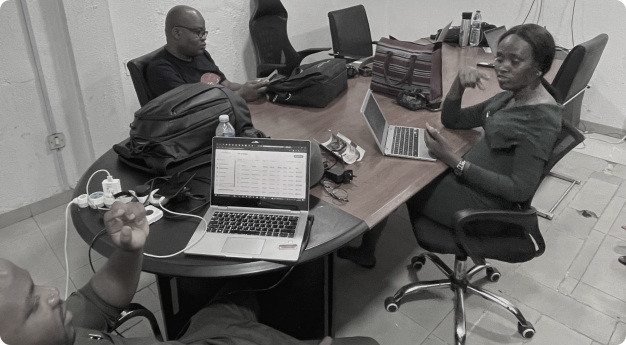
Before building, we had to see clearly. This phase was about illumination, lighting the lantern and walking through the fog of assumptions. I sat down with Pharm. Wale and Sola, not just to gather goals, but to understand the heartbeat of the business. We crafted questionnaires like compasses; one for internal teams, one for existing users — each designed to uncover the hidden terrain: trust gaps, delivery pain points, and access barriers. It wasn’t just research. It was reconnaissance
Drawing the Map & Findings
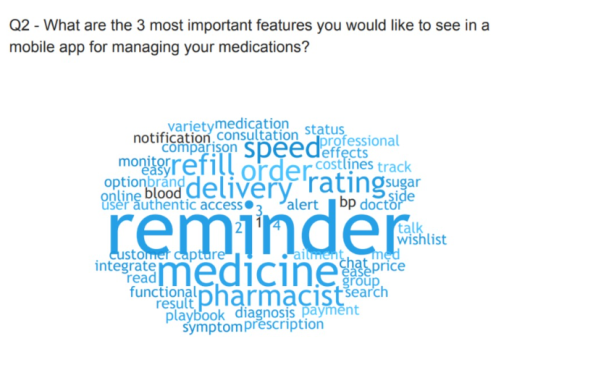
During this phase We mapped nees and laid the groundwork for what would become design.
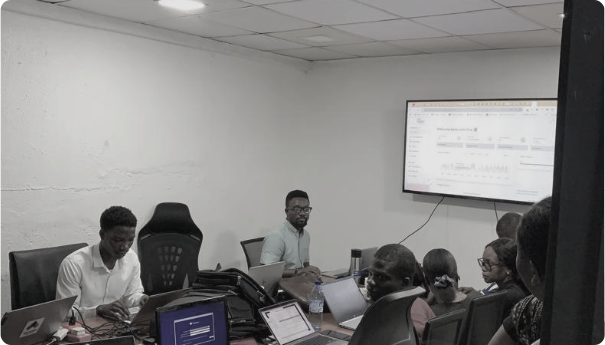
Insights are only useful when they’re charted. Here, we turned raw data into direction. Survey results became coordinates. Stakeholder meetings became waypoints. And the PRD? That was our map. It was updated, annotated, and aligned with both business/ User goals. I led the synthesis, not just to organize findings, but to translate them into strategic clarity. Every feature we prioritized had a reason. Every decision had a story. This was the moment we stopped wandering and started navigating.

Brainstorming meetings to finalize features

Building the Bridge
Here, we connected what we learned to what we were about to build.
We needed a bridge between user needs and business goals, and I led the team in laying its foundation. Mood boards set the emotional tone: trustworthy, accessible, patient-first. Then came the system typography, color, components— built to scale across the Web and Mobile.
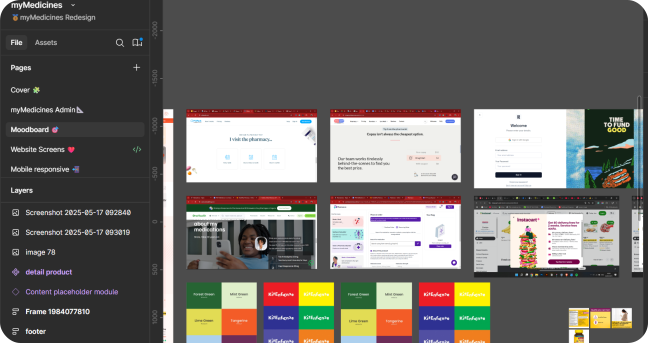
Snippet from the myMedicines moodboard, highlighting colors and inspiration.
When we moved from research and feature definition into the design phase, one of my first steps was to establish a design system. The goal was to create a consistent, scalable, and reusable set of design guidelines that would work across mobile and web platforms
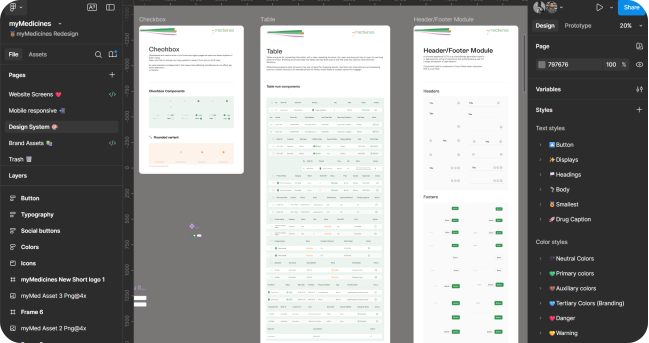
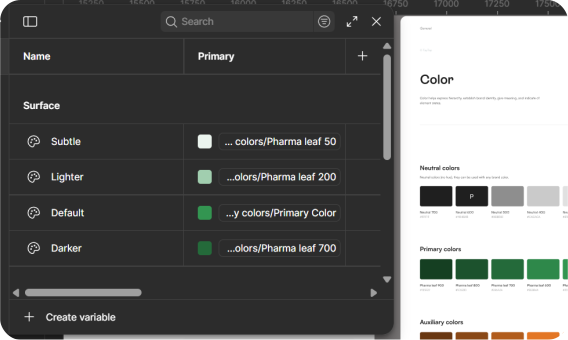
Input fields, dropdowns, checkboxes, radio buttons—all optimized for web + mobile usability.
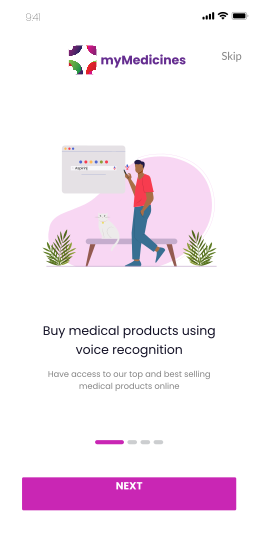
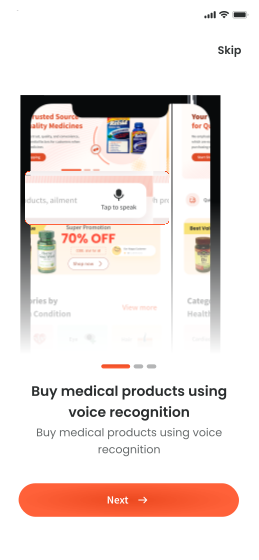
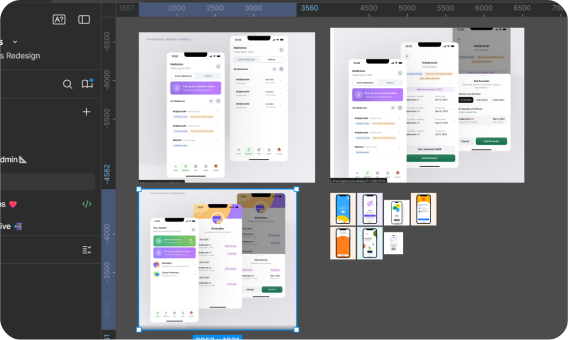
Evolution of the myMedicines mobile app design: first in 2021, then 2023, and most recently 2025
In our design workshop we mapped out flows for AI features that guide, recommend, and reassure.
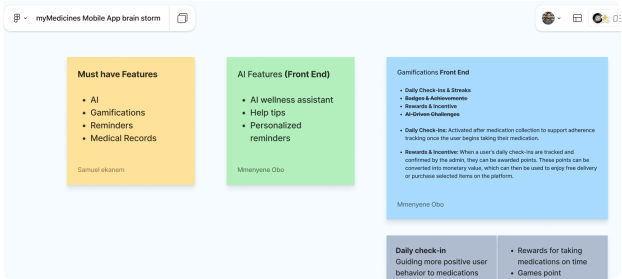
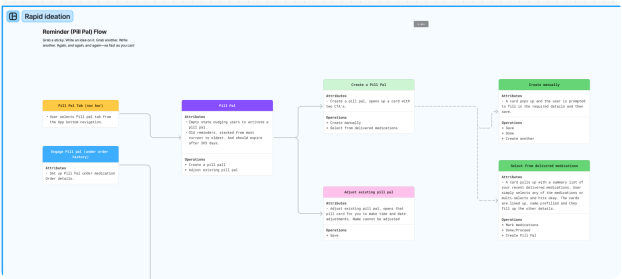
excerpts from our brainstorming session with the design team
Delivery — Setting the Wheels in Motion
Showcasing delivery details within the myMedicines mobile + web experience
We transition from raw ideas and sprints to polished screens and working code. Design doesn’t end at handoff but it begins there. The Ignition phase marked a critical shift: from visual clarity to functional precision. My focus was clear, to make implementation frictionless, intentional, and aligned. Every pixel, every interaction, was translated with care to ensure that what users see is exactly what they experience. Using Trello, I tracked progress and provided real-time feedback to ensure the build aligned with the design vision.
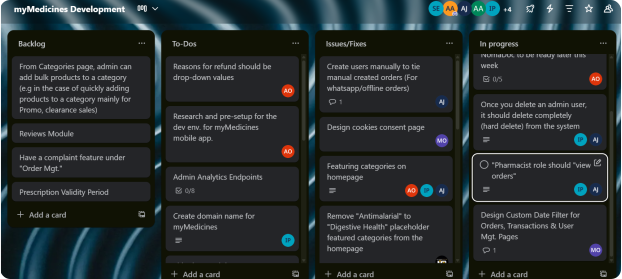
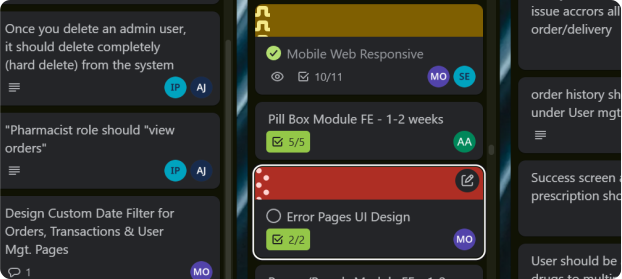
Tracked design delivery and implementation progress during sprints using Trello
During the design phase of myMedicines (both mobile and web), collaboration played a key role in refining user flows and UI consistency. Using Figma’s multiplayer and commenting features, the design and development teams provided real-time feedback on interface elements, interaction patterns, and visual hierarchy.
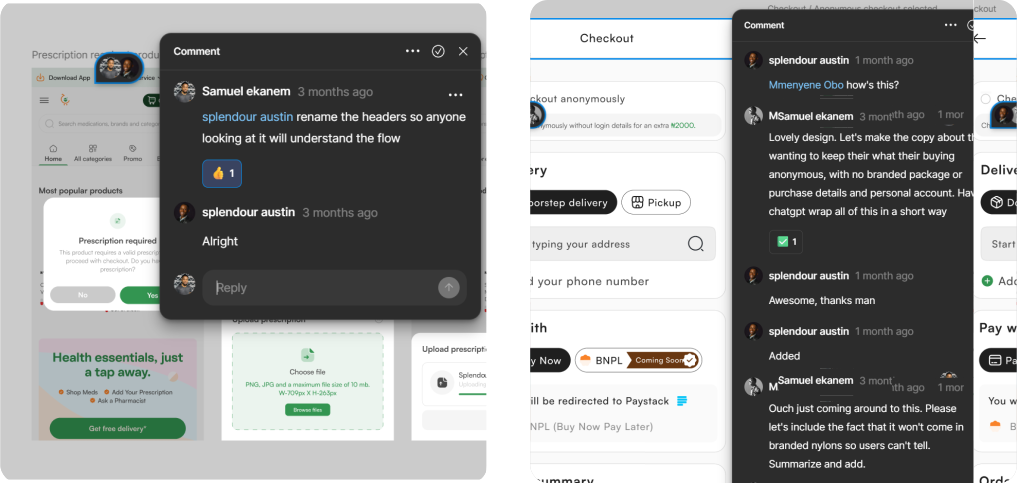
Collaborated in Figma and ensure design follow-up
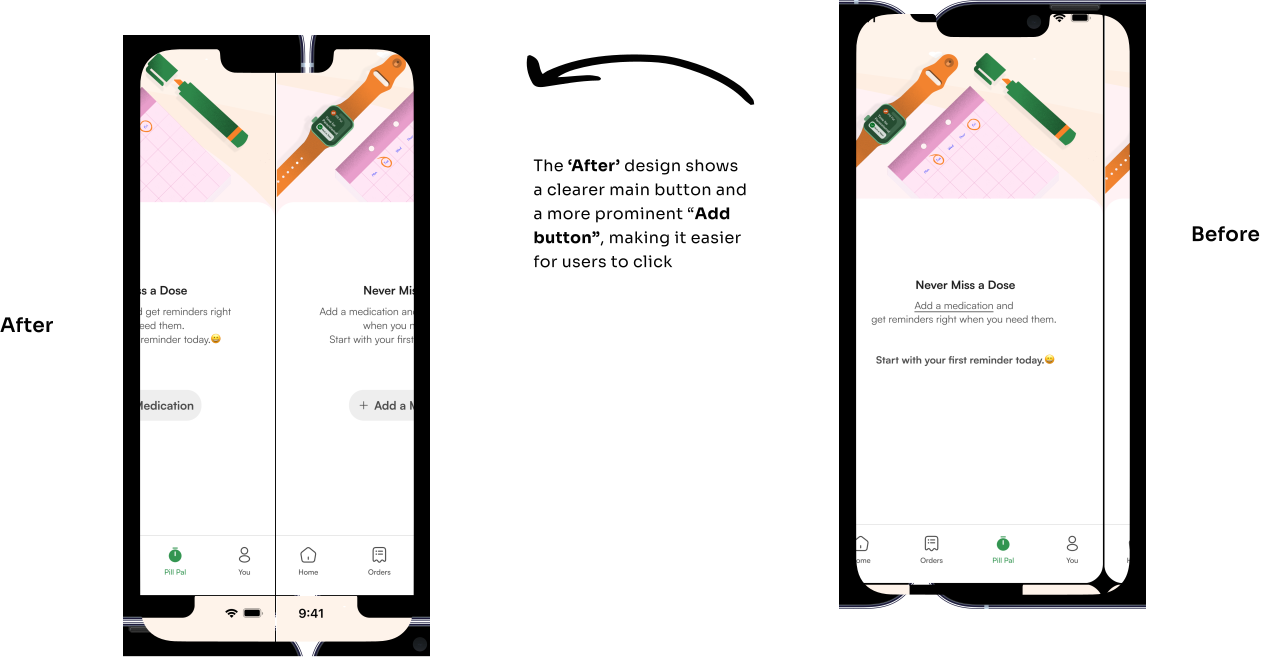
An improved representation of the "Pill Pal" feature screen, accurately displayed on the myMedicines mobile app.
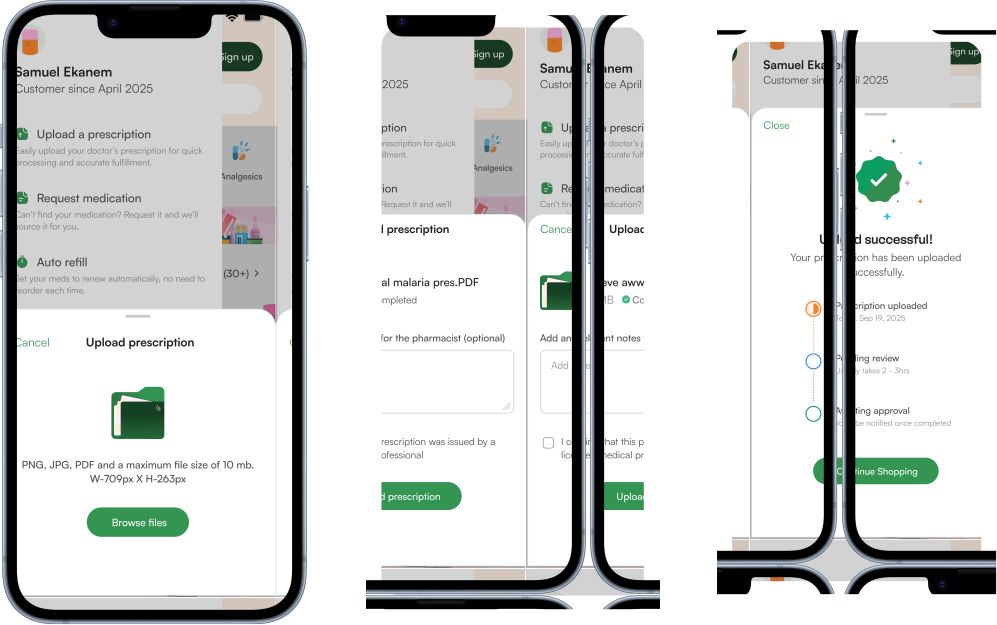
Users can quickly upload prescriptions via photo, link, or document, making medication management simple and seamless.
From concept to interface
AI-driven Wellness Assistant
Welli was designed to be more than an assistant, it's a caring presence in the myMedicines App. From morning check-ins like "How are you feeling today?" to gentle nudges about rest or hydration, Welli interacts in a tone that feels human, kind, and relatable.
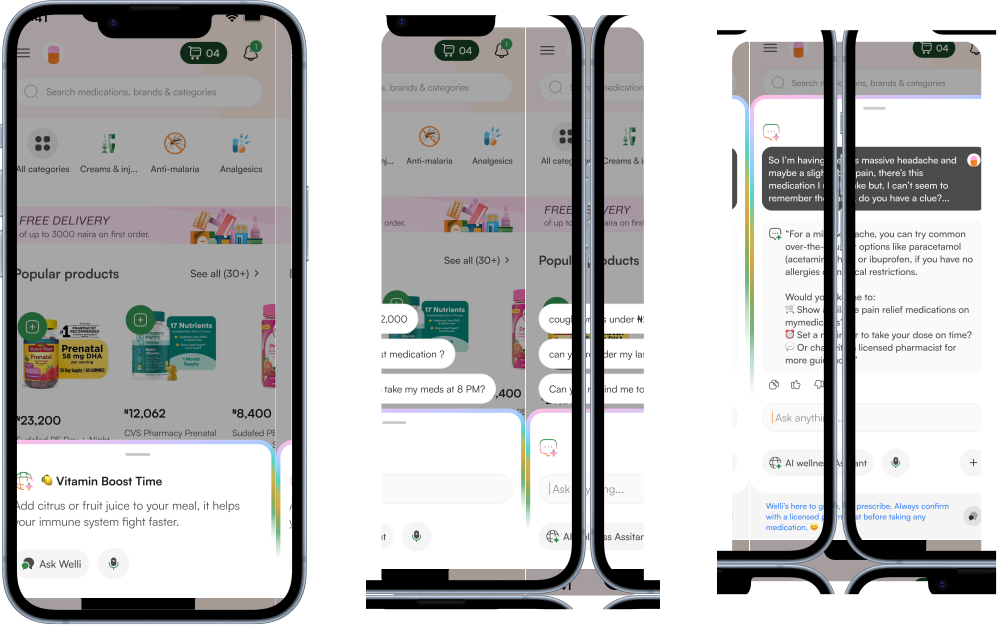
Your AI companion that grows with you — guiding, not instructing, and turning small moments into lasting trust.
Design Handover
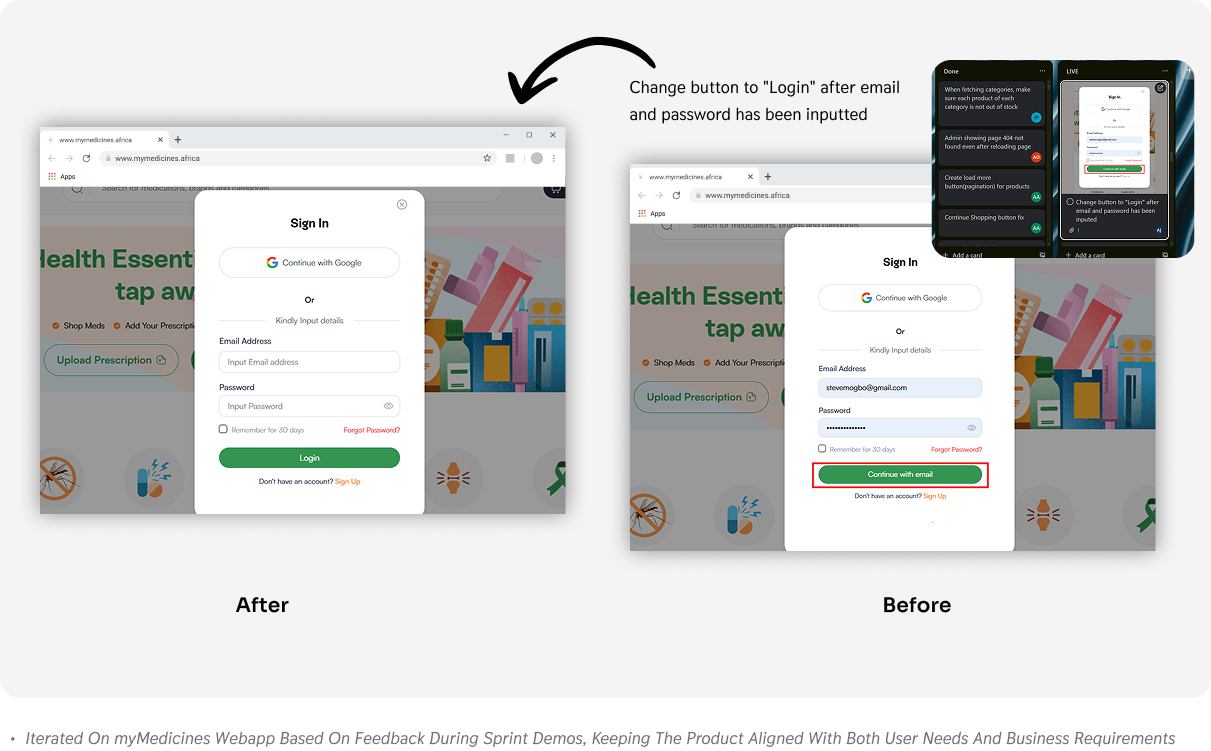
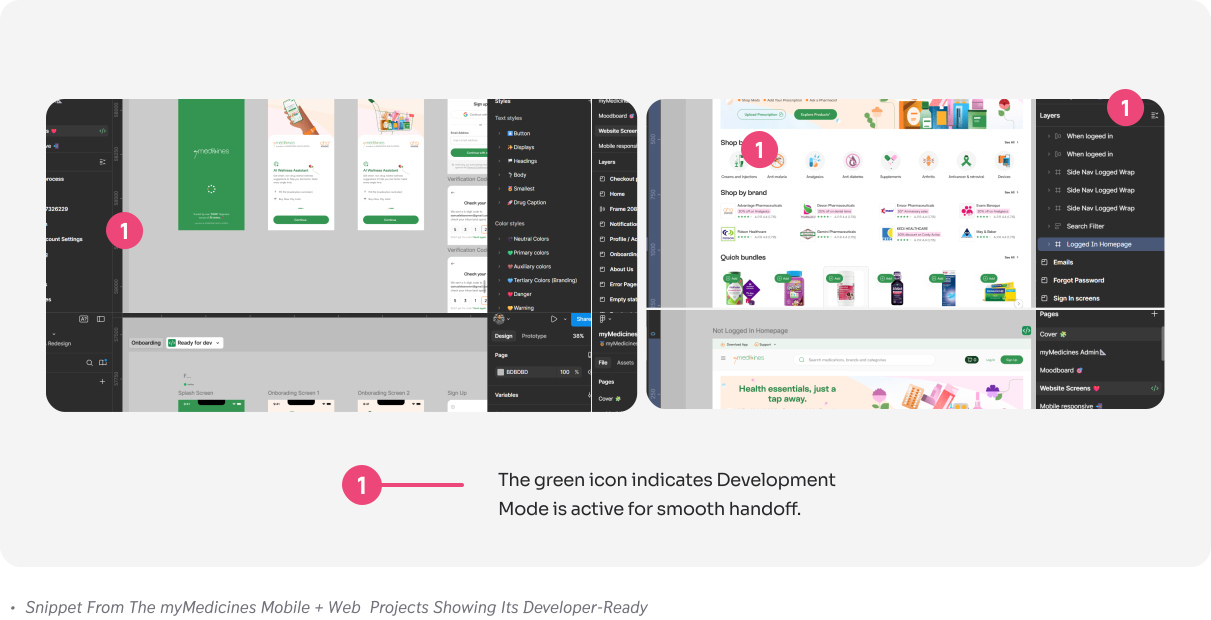
To support a smooth transition into development, I prepared annotated Figma files and a structured component library for the mobile and web app. I documented states, spacing, and interaction rules, and worked closely with developers during sprint reviews.
Design Impact
Although the product is still early in its lifecycle, myMedicines₂ has already begun showing meaningful traction. So far, we have onboarded over 200 new users and recorded 40+ sales, validating the need for a trusted, technology-driven medication access platform.
Key impacts:
• As part of this growth, we have successfully onboarded:
NOMADOC; Enabling medication fulfilment for people flying into Nigeria, looking for quality health products.
Africa Hub for Innovation and Development (AHID); Focused on sexual health product distribution through our platform.
To support scalability, we have also built a robust set of APIs that allow external partners to integrate with the myMedicines ecosystem, further extending our reach to more Nigerians and increasing accessibility beyond our primary app interface.
- • Enabled future scaling: Designed flexible flows supporting AI features, gamification, and integration with myAdvantage, reducing future redesign cost.
- • Optimized operational efficiency: Simplified complex back-office processes (vetting, pooling, approvals, inventory visibility) into a coherent, scalable design system.
Reflection
The myMedicines mobile app has been an exciting cross-functional project built using Agile workflows, with launch set for Q1 2026 and AI features following soon after. Users will engage with Welli, our AI Wellness Assistant, and upcoming tools like Pill Pal to enhance their medication experience. As we shift from web-first to mobile-first, we expect strong growth supported by targeted marketing efforts and expanding pharmacy partnerships. With solid product design, partner integrations, and scalable APIs, myMedicines is well positioned to grow into a nationwide digital health platform.
Next Project